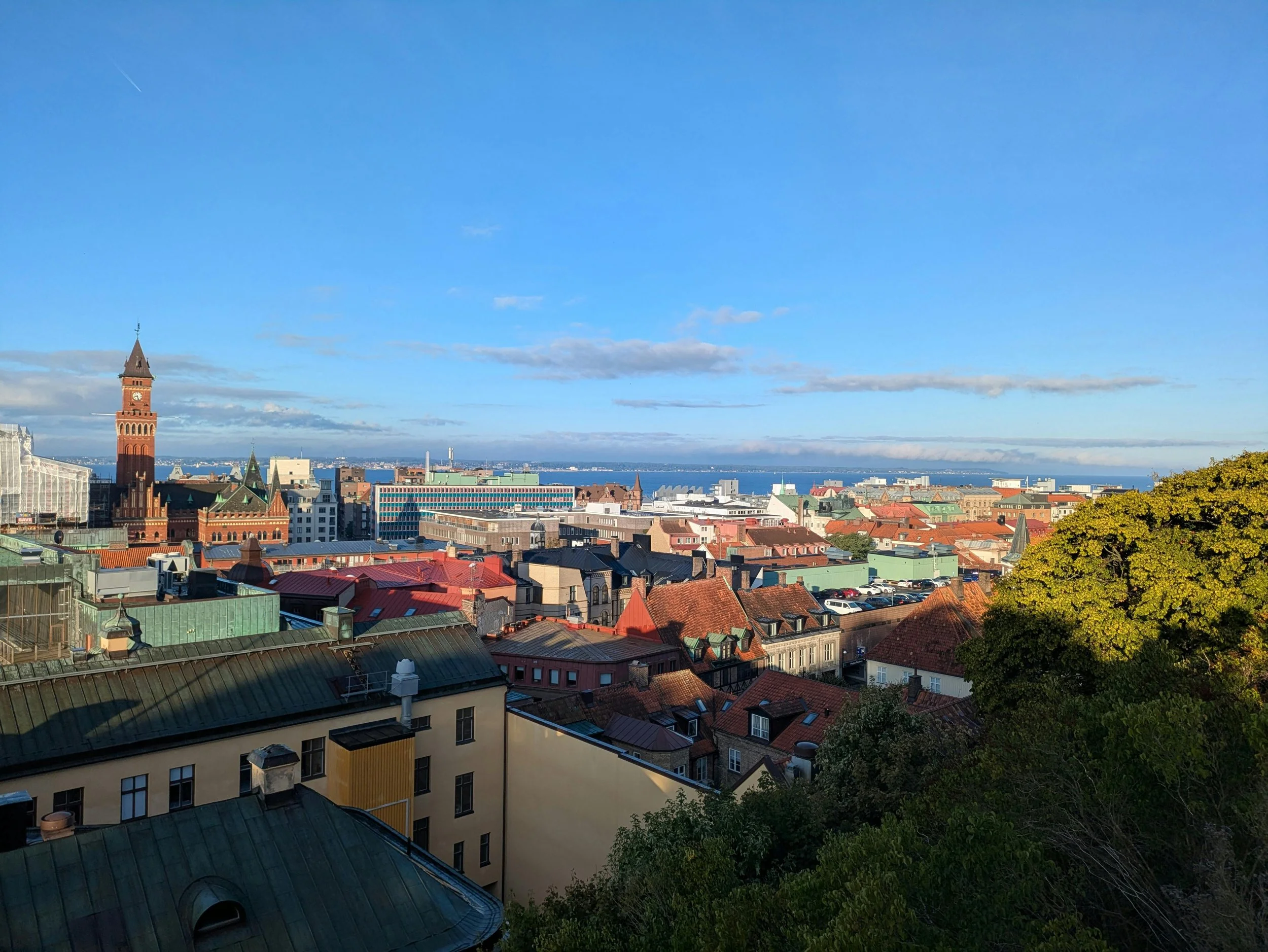
Bridging the urban ambition-action gap
A simple, practical and free method for people who want to move from ambition to action in cities – and agree on how to get unstuck.
Born in Swedish consensus culture, ready for cities everywhere.
Foto: Jakob Andersson / Pexels
FEATURED IN:

THE PROBLEM:
Friction inside City Hall
Most cities now have bold net‑zero targets. Yet inside City Hall, the shift from political intent to practical implementation is slow, messy, and full of friction – for individual officials as well as for whole departments. So what actually stops ambition from becoming action?
For years, the blame has gone to political polarisation or a lack of knowledge. But practitioners and researchers increasingly point somewhere else: internal friction. This is especially acute for climate action. Even when targets are clear, and the science is uncontested, progress gets stuck. In most cities, this shows up in three main ways:
Formalities. Mandates collide. Budgets are tight. Every idea needs several champions to become real. Without them, good intentions quietly die in inboxes and to‑do lists.
Structures. Siloed departments work in isolation. One hand doesn’t know what the other is doing. Different missions, different KPIs, different end goals.
Relationships. A municipality is not an automated conveyor belt. Before an idea becomes reality, it passes through many hands. Outcomes are often shaped more by informal ties and unspoken trust than by flowcharts and organigrams.
Today, cities often rely on informal networks and individual champions to move things forward. That works – until it doesn’t. Without a structured way to tackle this internal friction, progress depends too much on informal networks and individual champions.
This friction is most acute in medium‑sized cities: too big to rely on informal coordination, too small to have full‑blown integration machinery.

THE SOLUTION:
Removing the friction between ambition and action. Do it yourself or as a team.
Credits: Moe Gagners / Pexels
The Actionable Consensus Framework (ACF) works like a lubricant for the municipal machinery, helping stuck processes get unstuck and moving again.
ACF is simple to use and run in‑house – no external experts required, no new mandates or budgets needed. You can pick it up yourself for one stuck issue, or your city can adopt it as a shared way of working across teams. In both cases, it cuts friction in how people work together, using three practical principles that speak to both individuals and the organisation:
01
Start with quality of life, not carbon goals.
Framing an issue in terms of how it contributes to quality of life and prosperity – not just emission-reduction targets – lets municipal departments skip abstract meta‑debates and focus on what residents and leaders actually care about.
02
Get a shared sense
of what the future will feel like.
ACF uses emotionally engaging, science‑based, locally relevant stories to convey to participants what a future day in a climate-neutral city feels like. It makes abstract goals feel real, shared and achievable.
03
Let bureaucrats
remain human.
Remember that decisions are always made by real people, never faceless functions. Acknowledging participants' multiple identities and roles to surface makes trust grow faster, surfaces conflicting priorities earlier and finds actionable consensus that includes more perspectives.
HOW IT WORKS
From ambition to action in hours, not years.
ACF is a structured, in‑person process that any motivated city leader can use to convene a small group of people who actually hold decision‑making authority – especially in medium‑sized cities, where climate‑related friction tends to peak.
The goal is straightforward: cut through polarisation and departmental conflict so both the individual issue and the city can move – with Swedish fika (coffee and cinnamon buns) used strategically to build trust.
Credits: Semyon Borisov on Unsplash
-
This preparation is a full working day of legwork: mapping the decision landscape, clarifying who supports what, identifying which departments are affected, and understanding where previous attempts have stalled. The issue is then reframed as a path toward improved quality of life and economic prosperity, before a small group of 5–8 key decision‑makers is invited to a physical session.
Clarify the real problem.
Translate the challenge into a clear, locally relevant issue statement tied to core municipal duties (e.g. housing, transport, health, local economy). Make it explicit that the session is about agreeing on concrete actions that improve the quality of life and economic prosperity while moving towards climate neutrality.Map who and what matters.
Identify key stakeholders, departments, and political support. Flag past obstacles and sensitive fault lines so they can be handled deliberately rather than discovered in the room. From this mapping, invite a small, engaged group of 5–8 people with real decision‑making authority.
These preparatory steps “pre‑align” the conversation with real decision power and institutional constraints, reducing the risk of wish‑lists that no one can implement.
-
An ACF session is a fast-paced, structured conversation designed to build trust quickly and shared understanding. You set a clear frame, paint a vivid picture of a possible future, welcome a mix of perspectives into the room, and then dive straight into generating, clustering, and prioritising ideas. By the end, the group has a short list of concrete actions, each with a clear owner and deadline.
With this groundwork in place, the ACF session becomes a dynamic, carefully sequenced conversation that looks from the future back to today, helping people feel safe enough to be honest, creative, and decisive.
Start the Conversation Well.
Restate the locally framed issue, link it to existing municipal goals, and explain the session structure. Introduce participants as equals and agree on simple ground rules: listen, stay open, and focus on shared understanding rather than on who said what.Agree on a Shared North Star
Explain that climate neutrality is a means to a better quality of life and a stronger local economy, aligned with sustainability principles. Ask participants what “quality of life” means to them. This creates shared values and a basic level of trust before you move into more sensitive topics.Experience a Day in the Future in our City.
Use a pre‑designed, locally relevant story of everyday life in a climate‑neutral city. The narrative is scientifically robust, emotionally credible, and shows that a good life within planetary boundaries is possible without sacrificing comfort or joy.Explore Who We Are.
Invite participants to name several identities they carry (e.g., role, profession, heritage, personal, and possibly political identities) and the groups they care about. This broadens perspectives, surfaces concerns that could block progress, and builds empathy on top of already established common ground.Take a Fika Break.
Use a short Swedish fika – coffee and cinnamon buns – to create relaxed, informal conversations. This helps participants relate as people, deepen trust, and feel safer before they commit to concrete decisions.Find what we can agree to do.
Ask participants to share their department’s priorities, then brainstorm solutions individually on sticky notes. Read, cluster, and discuss the ideas, and use dot‑voting to highlight ambitious yet realistic actions that improve quality of life and economic prosperity while advancing climate neutrality.Commit to concrete next steps.
Turn the most supported ideas into clear proposals with actions, owners, and deadlines. Capture decisions in a simple action list so accountability is visible, and follow‑up is straightforward.
Reflect on what you just did.
End with a short round where participants name one shift in thinking and one concrete piece of progress. Confirm the agreed actions, responsibilities, and follow‑up dates so everyone leaves with a shared sense of direction.
Traditional negotiations are about trade‑offs: everyone leaves with less than they wanted. An ACF session is different. It focuses on solutions that everyone in the room can accept, own, and defend — in their own work and on behalf of the city.
Instead of open‑ended “visioning” exercises, ACF uses science‑based story templates as cognitive anchors. These keep imagination aligned with the real scale and urgency of climate action, while making the future concrete enough for individual officials to act on in their day‑to‑day decisions.
ACF is:
Pragmatic. Rooted in the core mission of the municipality and the realities of people’s jobs, not in theoretical models.
Structured. Built on proven templates that any motivated official can use to save time, reduce risk, and get to a clear agreement.
Relationship‑driven. Designed to build the trust that both individuals and whole teams need for long‑term, sustainable decisions.
The documentation is available in English 🇬🇧 and Swedish 🇸🇪.

Looking up to find a shared North Star
Many processes start from today’s constraints and inch forward. An ACF session does the opposite. Participants first agree on a few guiding lights – what a good life in a climate‑neutral city should feel like. In Sweden, we look up at the northern lights not to navigate every step, but to gain perspective.
From that wider perspective, the group locates its North Star: a clear, shared description of the future they want to work towards. Then they work backwards, using backcasting to map the steps from that future to today and decide what has to happen next.
This backcasting logic is grounded in the Framework for Strategic Sustainable Development (FSSD), a robust approach to strategic sustainability planning. ACF is fully aligned with FSSD for those already using it, while remaining accessible for those who have never heard of it.
Credits: Fredrik Larsson and Göran Strand /imagebank.sweden.se
WHAT OTHERS SAY:
“Using ACF for sustainable city planning is the perfect addition to FSSD – preserving scientific rigor while adding the psychological and social dimensions that bring people into the room, align how they see the future, and help them turn ambition into action."
— Dr Karl-Henrik Robert, founder of the Framework for Strategic Sustainable Development, Blue Planet Prize laureate and professor emeritus at the Blekinge Institute of Technology.
“The ACF marks a genuine mindshift in how we think about implementation in cities, blending practical experience with academic insight into a fresh, promising way for mayors to actually deliver on their ambitions.”
— Dr Marc Weiss, visiting professor at the University of California, Berkeley, founder of the Global Urban Development Network, author of “Rise of the Community Builders:”
The Actionable Consensus Framework was developed in close collaboration with ten Swedish cities, based on their real needs and everyday constraints inside City Hall. The work was shaped directly by the practical challenges these municipalities faced in turning climate ambition into concrete action.
To ensure that ACF is both scientifically robust and practically useful, the framework has been reviewed and vetted by leading scholars in urban and sustainability governance in Sweden, the UK, and the US. Their input has helped ensure that what began in Swedish cities is not just a local solution based on Swedish consensus culture, but a globally relevant tool that any city can use.
Today, the framework is maintained and developed by the independent, non‑profit Actionable Consensus Foundation and is freely available for cities and practitioners around the world who are ready to move from ambition to action.
Born in Swedish consensus culture, ready for cities everywhere.
Photo by Hanlin Sun on Unsplash
Q&A:
Your questions, answered the Swedish way
We are Swedish. We do not do long speeches when a clear answer will do. Below you’ll find straightforward, jargon‑free responses to the questions cities most often ask about ACF – whether you are one person trying to move a stuck issue forward or a whole city looking for a better way to work together.
-
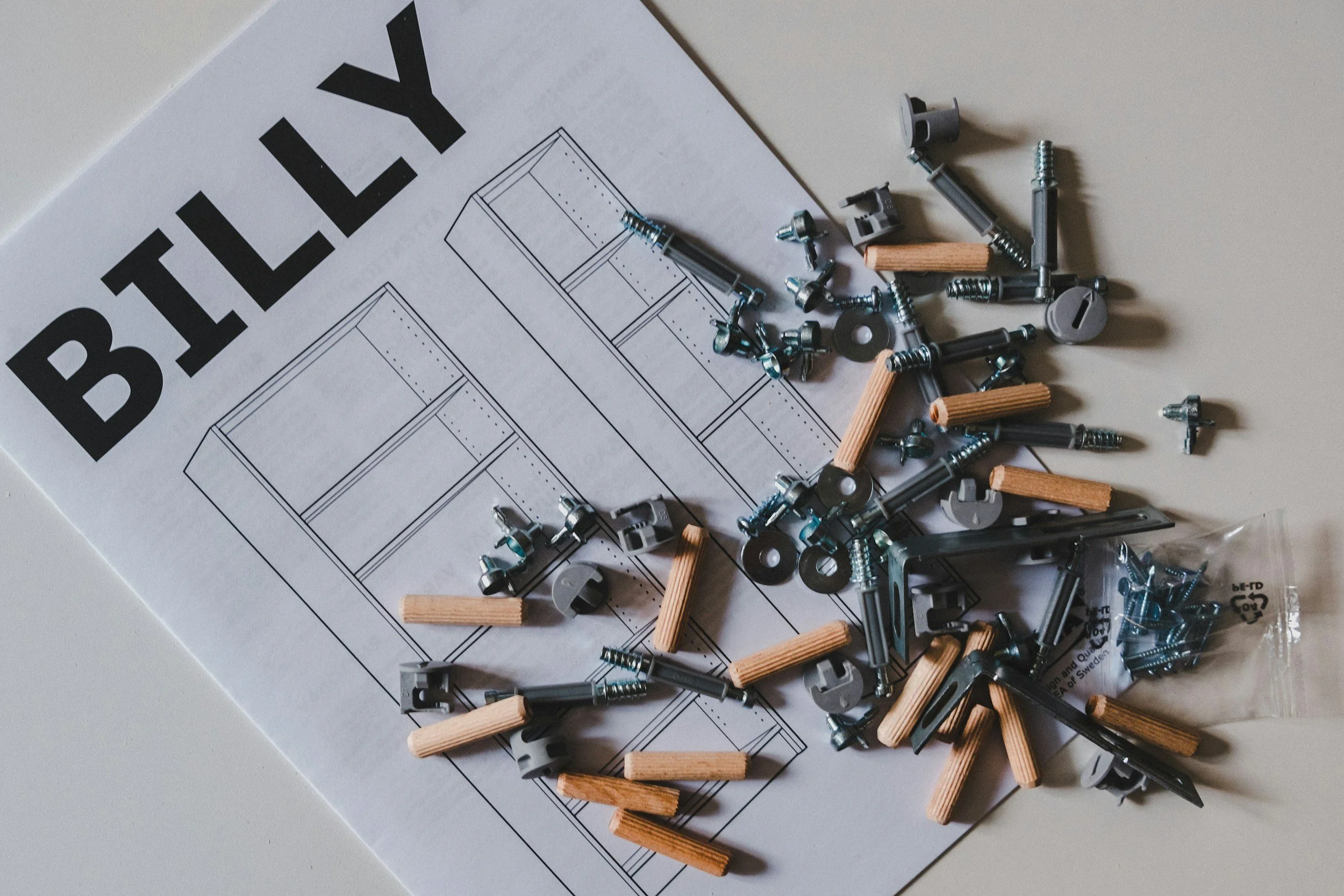
No. ACF is built to be self‑contained. You get a comprehensive playbook with scripts and templates. Think of it like IKEA furniture: it arrives flat‑packed but complete. You assemble it yourself.
If you are an individual civil servant, you can use ACF on a single tricky issue inside your own mandate. If you represent a department or a whole city, you can adopt it as a shared method across teams. In both cases, your own people run the process – which means your team truly owns both the process and the outcome.
-
The pilots were in Swedish cities, but the foundation is global. ACF is built on international research in negotiation theory, behavioural science, and social identity theory. The “ambition–action gap” is not a Swedish problem; it is a human one.
Whether you are a single official in Stockholm, a cross‑departmental team in Singapore, or a mayor’s office in Seoul, the same frictions show up: formalities where mandates collide, and budgets are tight, structures where siloed departments pull in different directions, and relationships where informal ties and unspoken trust decide what actually moves forward.
ACF gives both individuals and whole organisations a shared way to see and address those frictions, wherever you start.
-
Yes – and that’s the point. “Complexity” is often used as an excuse to do nothing. ACF does not deny the complexity of urban governance. It simply stops it from paralysing you.
If you are one person, ACF helps you create a tightly structured two‑hour window with the right people in the room – just enough to unlock a stuck decision path. If you are leading a team or a city‑wide effort, the same structure can be repeated across multiple issues.
In both cases, ACF creates a “minimum viable consensus” – just enough agreement to start moving. And once you are moving, it is much easier to steer. You cannot steer a stationary bike.
-
Most workshops end with a “vision”. ACF sessions end with an agreement.
For an individual facilitator, that means you do not stop at slogans like “climate neutrality”. You work down to specific quality‑of‑life outcomes and named tasks with clear owners and deadlines.
For a city or department, it means you can rely on a repeatable format where every session ends with a concrete list of who is doing what, by when, and how they will report back. A simple test: if the session does not end with a clear understanding of who is doing what by Tuesday at 10:00 a.m., it was not an ACF session.
-
Two hours is enough to crack the friction and get the system moving.
At the level of a single case, ACF will not solve every technical detail, but it acts as a wedge: it opens a stuck conversation, aligns key players around a shared purpose, and nails down the first steps.
At the level of a city organisation, repeating this two‑hour format across different issues helps build a new working habit: short, focused conversations that lead to shared decisions and visible follow‑up. ACF is not a magic wand – it is a practical way to turn years of accumulated friction into a series of solvable next steps.
-
Most frameworks try to balance departmental interests. ACF starts from the emotional and relational realities that usually stall urban governance.
Three things make it distinct – for both individual users and whole cities:
From mandates to quality of life. Instead of getting stuck in narrow departmental trade‑offs, ACF points everyone to a shared North Star: future liveability and economic prosperity. One person can reframe a single issue this way; a city can use the same North Star across many processes.
From visioning to anchored storytelling. We swap free‑form brainstorming for vetted, science‑based story templates. These keep imagination realistic, aligned with climate science, and grounded in everyday life. An individual facilitator can use a single story in one room; a city can reuse and adapt it across many.
From neutrality to identity. Many models urge you to “separate the person from the problem”. ACF does the opposite. It invites personal and professional identities into the room. By acknowledging who people are and what they care about, you reach robust agreements on the common good faster – whether in a single high‑stakes meeting or as a new organisational habit.
-
Fair question. Corridor chats and shared coffee are the natural lubricants of any city. They matter. But they rarely unlock structural deadlocks.
ACF is different because it is a structured process for results. A coffee builds relationships; ACF turns those relationships into actionable consensus.
If you are one person convening a session, you use fika strategically inside the process to lower barriers and find common ground – but you surround it with:
science‑based storytelling so everyone is moving towards the same future
clear decision steps that move the group from ideas to priorities
concrete accountability so every participant leaves with a mandate, a deadline, and a way to report back.
If you are responsible for a team or a city‑wide programme, you use fika – and the structure around it – in the same way across many meetings. In short: you channel the human power of informal conversation through a method that actually turns the municipal machinery.
-
Informal chats are perfect for building trust. They are poor at turning that trust into change.
For an individual official, ACF takes the energy of informal connection and adds just enough structure to produce results:
From vibes to accountability. Instead of ending with “we should do something”, you end with a specific task, a date, and a reporting line.
Aligned imagination. You replace ad hoc brainstorming with structured narrative templates. Everyone is picturing the same kind of future city, which makes it easier to set aside departmental egos and focus on residents’ lives.
For a city organisation, the same elements become a repeatable system:
informal influence no longer depends only on personalities and networks
ACF becomes a documented playbook that turns consensus‑building into an institutional skill anyone can lead.
-
Very little. ACF is deliberately low‑threshold. You are already busy; this is meant to plug into your reality, not add a new layer of work.
You need four things:
A specific deadlock. Pick one city hall ambition that has gotten stuck because of departmental friction or clashing priorities. If you are an individual, start with the case that is keeping you up at night. If you are a team or a city, start where the gears are grinding loudest.
The Playbook. Download the guide with templates, scripts, and step‑by‑step instructions. One person can use it for a single session; a city can make it a standard way to run key meetings.
The right eight people. Bring together 5–8 stakeholders who have the formal mandate to make decisions on that specific issue. This is true whether you act on your own initiative or on behalf of a whole department.
Two hours. Block the time. No phones, no interruptions.
That is it. No external consultant budget. No six‑month pre‑study. You just need a day of planning, the playbook – and the courage to put the right people in a room for 120 minutes, whether you do it once as a motivated individual or repeatedly as a city‑wide practice.
-
For about 30 years, we treated climate change primarily as a knowledge problem or an ideological issue. In reality, it is mainly a problem of cooperation.
Many academic ideas work elegantly on paper but fail in city hall. ACF was built the other way round: from years of hands‑on work with municipal officials, in their meetings, under their constraints.
We focus on the who. Traditional models aim for objectivity and try to strip out identity. We start from the fact that personal and professional identities are what actually drive – or block – decisions.
For an individual user, that means you finally have a method that matches the real politics of your daily work – not an abstract model that ignores it.
For a city, it means you can scale a way of working that is:
Anchors over visions. Instead of vague “2050 visions”, you use science‑based narrative anchors that make the future feel real rather than like a spreadsheet.
Practitioner‑led. ACF is not an academic hypothesis. It is a flat‑packed system designed for the everyday reality of the city hall.
Whether you are just one person trying to move a single decision or a whole city ready to shift how you work, ACF is built so you do not have to wait for perfect conditions. You can start where you are – and move from ambition to action together.
GET STARTED:
Do it yourself.
Use it as a city team.
No New Process. No Permission Required. No experts needed. That is because ACF is not a new governance model. It’s a lubricant for the processes you already have.
That means you don’t need a formal mandate, a new policy, or a green light from city leadership to use it. If you are an individual official stuck in a tricky case or a slow decision path, you can pick up the framework and apply it yourself. And if you are part of a leadership team, you can adopt the same method as a shared way of working across the whole city organisation.
You also don’t need a new budget line or expensive consultants. ACF is flat‑packed and ready to use: you get scripts, templates, and step‑by‑step guidance. Just as anyone can assemble IKEA furniture by following the manual, anyone with basic facilitation skills can run an ACF session – once for a single issue, or repeatedly as a city‑wide practice.
You are not changing how decisions are made. You are simply helping the existing machinery run more smoothly:
Same mandates, budgets, and procedures – less friction.
No new “process” that has to be approved – just a smarter way of running the ones you already use.
Easy to test on one issue or in one team before anyone decides to scale it across the city.
In practice, using ACF is no more radical than using a better agenda or clearer minutes. The difference is that this “lubricant” is tested, documented, and built for the real politics of city hall – so you don’t have to wait for permission or new funding to get moving, whether you are acting as one motivated person or as an entire municipality.
As a member, you will have access to documentation and training for the Actionable Consensus Framework, as well as a wealth of resources and exclusive content tailored to your needs.